
You speak alone for a minute or two while your partner listens. At B1 Preliminary it is one photo to describe; at B2 First and C1 Advanced it is two photos to compare and a question to answer; at C2 Proficiency it is a question on a card.
| Exam | Paper and part | Questions | Marks | Counts towards |
|---|---|---|---|---|
| B1 Preliminary | Speaking, Part 2 | 3 minutes | Assessed across the test | Speaking |
| B2 First | Speaking, Part 2 | 4 minutes | Assessed across the test | Speaking |
| C1 Advanced | Speaking, Part 2 | 4 minutes | Assessed across the test | Speaking |
| C2 Proficiency | Speaking, Part 3 | 10 minutes, long turns then discussion | Assessed across the test | Speaking |
| Exam | Part | You get | You do |
|---|---|---|---|
| B1 Preliminary | Part 2 | One colour photograph | Describe it for about a minute |
| B2 First | Part 2 | Two photographs, question printed above | Compare them and answer the question, 1 minute; then 30 seconds on your partner’s photos |
| C1 Advanced | Part 2 | Three photographs, two questions above | Choose two, compare them and answer both questions, 1 minute; then a short response to your partner’s |
| C2 Proficiency | Part 3 | A card with a question and three ideas | Speak for 2 minutes; then a follow-up and a discussion with the examiner |
From B2 upwards the photographs are a starting point, not the topic. The question above them ("Why might the people have chosen to travel in these ways?") is what you are assessed on answering.
A complete long turn task at B2 First level. Work it with the answers closed, then open the key.
Part 2 (about 4 minutes). Each of you talks on your own for about one minute about two photographs, comparing them and answering the question printed above them. After your partner’s long turn, you answer a short question about their photographs in about 30 seconds.
Examiner
In this part of the test, I’m going to give each of you two photographs. I’d like you to talk about your photographs on your own for about a minute, and also to answer a question about your partner’s photographs.
(Candidate A), it’s your turn first. Here are your photographs. They show people learning new skills in different situations. I’d like you to compare the photographs, and say what the people might find difficult about learning in these situations. All right?
[Candidate A: about 1 minute]
Thank you.
(Candidate B), which of these ways of learning would you prefer? (Why?)
[Candidate B: about 30 seconds]
Thank you.
Now, (Candidate B), here are your photographs. They show people travelling in different ways. I’d like you to compare the photographs, and say why the people might have chosen to travel in these ways. All right?
[Candidate B: about 1 minute]
Thank you.
(Candidate A), which of these ways of travelling would you enjoy more? (Why?)
[Candidate A: about 30 seconds]
Thank you.
Candidate A
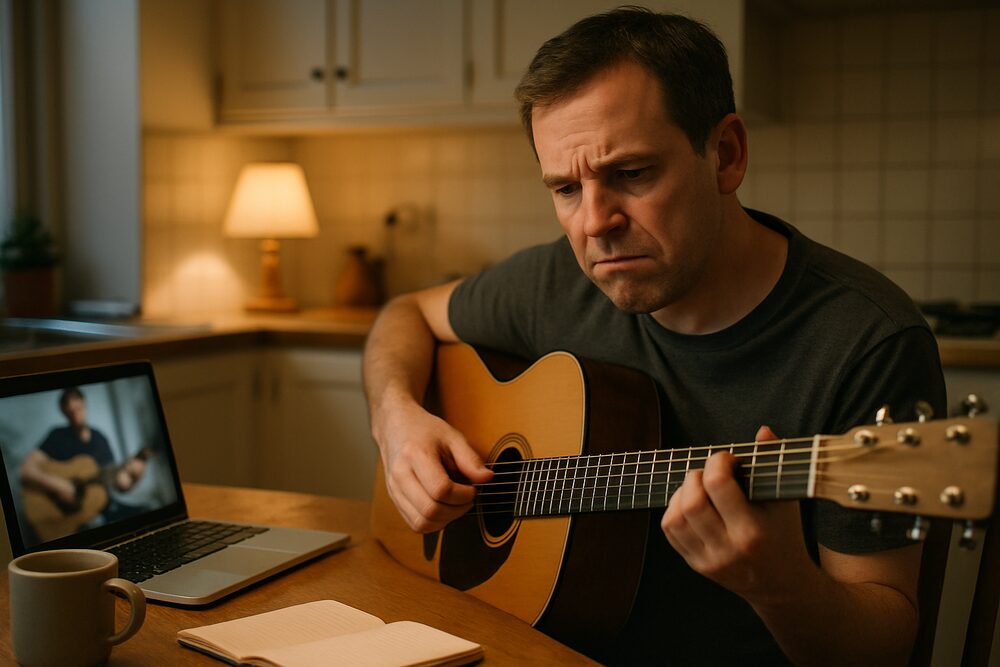
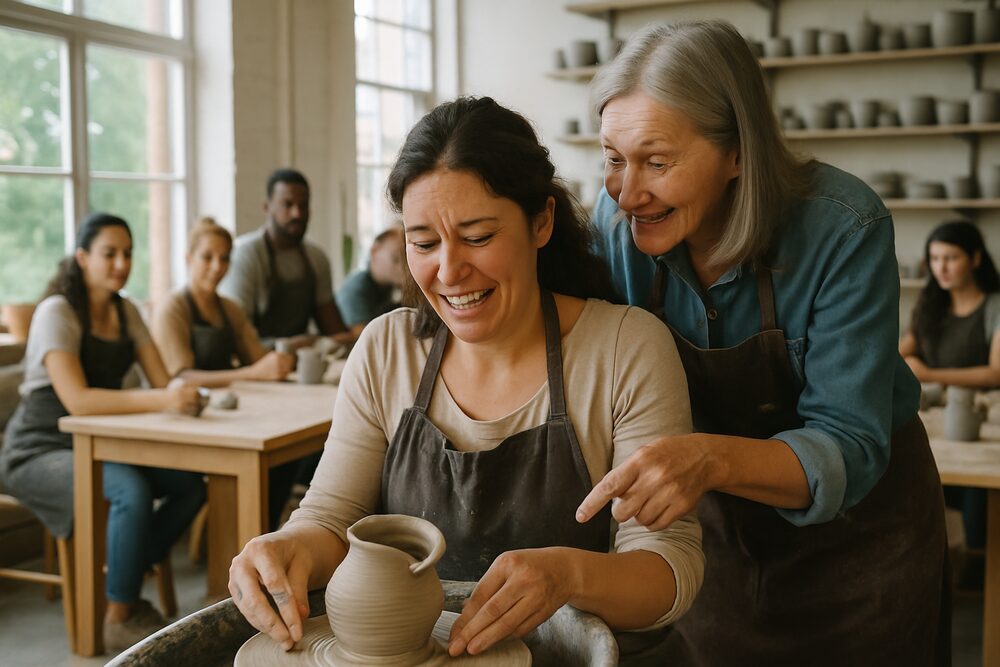
What might the people find difficult about learning in these situations?
Candidate B
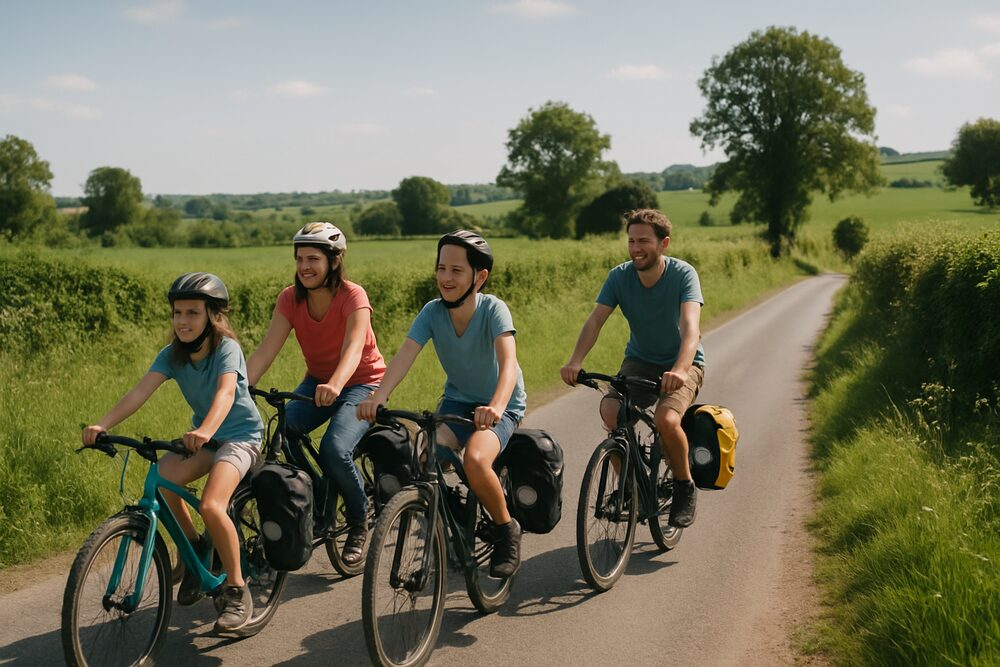
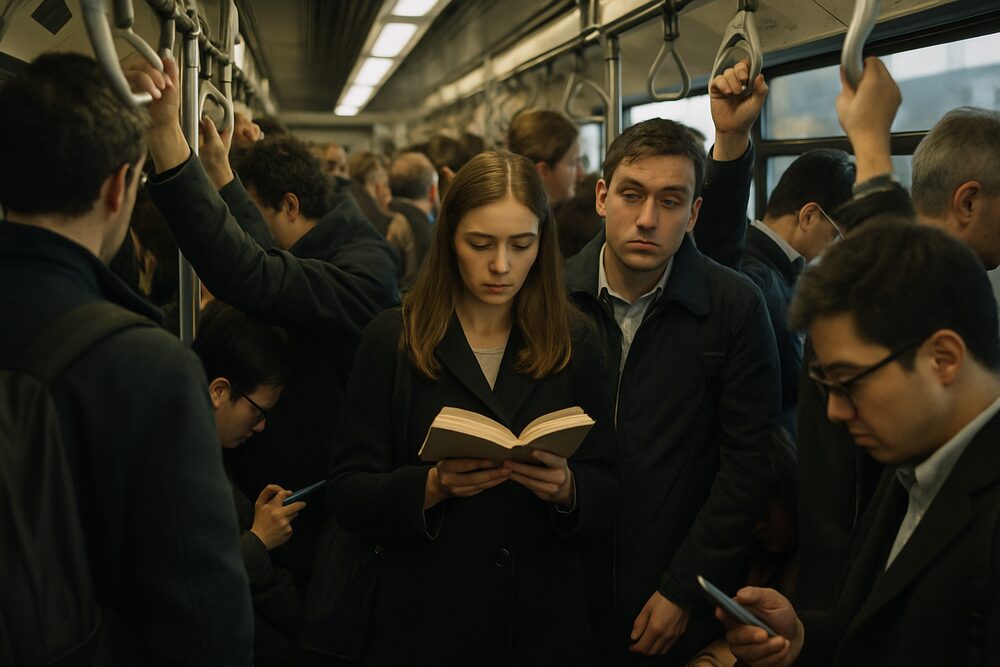
Why might the people have chosen to travel in these ways?
Sample answer
Sample Part 2 — Part 2 (long turn)
Examiner: In this part of the test, I’m going to give each of you two photographs. I’d like you to talk about your photographs on your own for about a minute, and also to answer a question about your partner’s photographs. Lucía, it’s your turn first. Here are your photographs. They show people learning new skills in different situations. I’d like you to compare the photographs, and say what the people might find difficult about learning in these situations. All right?
Candidate A: OK. So in both photos people are learning something new, but the situations are quite different. In the first one there’s a man at home, learning to play the guitar – I think he’s following a lesson on his laptop. In the second photo there’s a group of people in a pottery class, with a teacher. I think the man at home might find it difficult because nobody can correct him. If he’s holding the guitar in the wrong way, for example, the video can’t tell him, so he could get bad habits. He also looks a bit frustrated, maybe because he has to stop the video all the time. On the other hand, the people in the pottery class have a teacher who can help them – like the woman whose pot is, er, falling down, I think. For them the difficulty might be that everybody is watching, so if you make a mistake it’s a little bit embarrassing.
Examiner: Thank you. Tomasz, which of these ways of learning would you prefer?
Candidate B: I think I’d prefer the class, like in the second photo. I’m not very disciplined, so when I learn alone at home I usually stop after a few days. With a teacher and other people, you have to go every week, and it’s more fun, too. Although it’s more expensive, of course.
Examiner: Thank you. Now, Tomasz, here are your photographs. They show people travelling in different ways. I’d like you to compare the photographs, and say why the people might have chosen to travel in these ways. All right?
Candidate B: Yes. Both photos show people travelling, but in the first one I think it’s for pleasure, and in the second one it’s probably a daily journey. In the first picture there’s a family riding bikes along a road in the countryside. They have bags on their bikes, so maybe they’re on a cycling holiday. In the second picture, people are on a very crowded train – it looks like the rush hour in a big city. I suppose the family chose to cycle because they want to spend time together and be active, and you can stop wherever you want and enjoy the views. The people on the train, on the other hand, probably don’t have much choice. Maybe driving in the city centre is too slow, or parking is very expensive, so the train is the fastest way to get to work. Although it doesn’t look very comfortable, to be honest – almost everybody is standing.
Examiner: Thank you. Lucía, which of these ways of travelling would you enjoy more?
Candidate A: Oh, cycling, without doubt. I really hate crowded places, and on a train like that you can’t even sit down. But I’m not sure about cycling with all those bags for many days. Maybe for one or two days it would be perfect.
Examiner: Thank you.
Grammar and Vocabulary: both candidates use modals of speculation (‘might find it difficult’, ‘could get bad habits’, ‘probably don’t have much choice’) and a relative clause (‘the woman whose pot is…’), with topic vocabulary such as ‘disciplined’, ‘rush hour’ and ‘cycling holiday’. Lucía’s hesitation over ‘falling down’ is handled well without breaking the flow. Discourse Management: each long turn briefly compares the photographs and then answers the printed question for both, using ‘On the other hand’, ‘Although’ and ‘for example’ to organise the minute; neither candidate simply describes the pictures. Pronunciation: clear and easy to follow, with appropriate intonation when contrasting ideas. Interactive Communication: the 30-second responses answer the question directly and add a reason. Global Achievement: both candidates complete every stage of the task with relevant, extended contributions.
The same task type at other levels: B1 Preliminary, C1 Advanced, C2 Proficiency.
More practice at every level is on the Cambridge Speaking samples page. The whole section in context is on the Cambridge Speaking page, and how it is marked is on the scoring page.

Written by Kirill O'Nayd
English test expert and educator at TestSucceed. He has spent years preparing candidates for Cambridge English Qualifications from A2 Key to C2 Proficiency, and taking apart how each paper awards its marks. See all TestSucceed preparation materials.