
One hour, one uninterrupted sitting, no test centre and no fixed sections. The DET decides your level while you take it, which is why nothing about it looks like IELTS or TOEFL — and why preparing for it as though it did is the most common mistake test takers make.
Total time
About 1 hour
Score scale
10-160, in 5s
Question types
13
Results
Within 48 hours
| Feature | Detail |
|---|---|
| Where you take it | Anywhere with a quiet private room, a computer and a phone. No test centre, no appointment. |
| Length | About 60 minutes: roughly 5 minutes of onboarding, 45 minutes of adaptive questions, 10 minutes of samples. |
| Sections | None. The DET is one continuous adaptive session that mixes all four skills. |
| Scoring | AI-graded on a 10-160 scale in 5-point steps, plus eight subscores on the same scale. |
| Results | Certified and emailed within 48 hours. Sending scores to institutions is free and unlimited. |
| Validity | Two years from the test date. |
| Price | USD 70 for a single test, or a two-test bundle at a lower per-test price. The price is the same in every country. |
| Retakes | Up to three purchases in any 30-day period. You have 21 days to sit a test after buying it. |
| Acceptance | Over 5,000 institutions worldwide, including most US universities that take international applicants. |
Prices, policies and acceptance move. Confirm the current fee and your institution’s minimum score on Duolingo’s own site before you buy a test.
The hour is not one long exam. It is three stages, and only the middle one is adaptive.
A tech check on camera, microphone and speakers, a run through the rules, your ID held up to the camera, and the second camera set up on your phone. None of this is graded, but a mistake here can invalidate everything that follows.
Eleven of the thirteen question types, in a fixed order, with the difficulty of the adaptive ones moving with your performance. This stage produces your score.
Two long open responses. They count towards your Writing and Speaking subscores and are sent to every institution you share results with, as text and as video.
Stage 3 is the only part of the DET a human at your target university will actually read and watch. Treat it as an admissions document, not as the last two questions of a test.
The sequence below is the order the adaptive stage runs in. Knowing it matters: the reading vocabulary items come first while you are freshest, and every open speaking and writing task lands in the second half, when most test takers are already tired.
| # | Question type | How many | Feeds | Adaptive |
|---|---|---|---|---|
| 1 | Read and Select | 1 set of 15-18 words | Reading | Yes |
| 2 | Fill in the Blanks | 1 set of 6-9 sentences | Reading | Yes |
| 3 | Read and Complete and Listen and Type, in random order | 3-6 passages and 6-9 dictations | Reading, Listening | Yes |
| 4 | Interactive Reading | 2 sets of 6 questions | Reading | Yes |
| 5 | Interactive Listening | 2 scenarios | Listening, Writing | Yes |
| 6 | Write About the Photo | 3 | Writing | No |
| 7 | Interactive Writing | 1 set of 2 parts | Writing | No |
| 8 | Speak About the Photo | 1 | Speaking | No |
| 9 | Read, Then Speak | 1 | Speaking | No |
| 10 | Interactive Speaking * | 6-8 questions | Speaking | Yes |
| 11 | Writing Sample | 1 | Writing | No |
| 12 | Speaking Sample | 1 | Speaking | No |
Only the adaptive items change difficulty. The photo, essay and sample tasks are the same size for everyone, which makes them the part of the test you can prepare most directly.
* The sequence above is the one Duolingo publishes, with Interactive Speaking shown in the speaking block it joined in July 2025. Duolingo has not republished a numbered sequence since that change, so treat the exact position of Interactive Speaking within the speaking tasks as approximate. Everything before it is confirmed.
Each question type has its own page with worked examples, timing drills and the mistakes that cost the most points.
| Question type | Subscore | Per test | Time | Adaptive | Scored as |
|---|---|---|---|---|---|
| Read and Select | Reading | 15-18 words, one set | 5 seconds per word | Yes | Right or wrong |
| Fill in the Blanks | Reading | 6-9 sentences, one set | 20 seconds per sentence | Yes | Right or wrong |
| Read and Complete | Reading | 3-6 passages | 3 minutes per passage | Yes | Right or wrong, per word |
| Interactive Reading | Reading | 2 passages, 6 questions each | 7 or 8 minutes per passage | Yes | Right or wrong, except Highlight the Answer (0 to 1) |
| Listen and Type | Listening | 6-9 items | 1 minute per item | Yes | 0 to 1 scale |
| Interactive Listening | Listening (and Writing) | 2 scenarios | 6 min 30 s, then 75 seconds | Yes | Right or wrong, plus writing criteria for the summary |
| Write About the Photo | Writing | 3 | 1 minute | No | Writing criteria: content, discourse coherence, grammar, lexis |
| Interactive Writing | Writing | 1 (two parts) | 5 minutes, then 3 minutes | No | Writing criteria, both parts graded together |
| Writing Sample | Writing | 1 | 5 minutes | No | Writing criteria, and sent to institutions |
| Speak About the Photo | Speaking | 1 | 90 seconds | No | Speaking criteria: content, discourse coherence, fluency, grammar, lexis, pronunciation |
| Read, Then Speak | Speaking | 1 | 90 seconds | No | Speaking criteria |
| Interactive Speaking | Speaking | 6-8 questions | 35 seconds per answer | Yes | Speaking criteria |
| Speaking Sample | Speaking | 1 | 3 minutes | No | Speaking criteria, and sent to institutions as video |
Read and Select, Fill in the Blanks, Read and Complete and Interactive Reading. Together they take up more of the adaptive stage than anything else.
Listen and Type and Interactive Listening. Two types, but they carry the whole Listening subscore between them.
Write About the Photo, Interactive Writing, Writing Sample and the summary inside Interactive Listening.
Speak About the Photo, Read Then Speak, Interactive Speaking and the Speaking Sample.
Most of the reading and listening questions, and now the Interactive Speaking conversation as well, are computer adaptive. Answer correctly and the next item is harder. Answer wrongly and the next one is easier. The engine keeps narrowing until it is confident about your level, which is why the test can measure the whole 10-160 range in 45 minutes.
Because the engine adapts, a single careless early answer costs more than a single careless late one: it steers the difficulty of everything that follows. Spend your first thirty seconds settling in, not warming up.
Everything is reported on the same 10-160 scale in 5-point steps. Your overall score is the average of the four individual subscores; the four integrated subscores are averages of pairs of those, rounded to the nearest five.
| Individual subscore | Built from |
|---|---|
| Reading | Read and Select, Fill in the Blanks, Read and Complete, Interactive Reading |
| Listening | Listen and Type, Interactive Listening (Listen and Complete, Listen and Respond) |
| Writing | Write About the Photo, Interactive Writing, Writing Sample, Summarize the Conversation |
| Speaking | Speak About the Photo, Read Then Speak, Interactive Speaking, Speaking Sample |
| Integrated subscore | Average of | What it tells an admissions office |
|---|---|---|
| Literacy | Reading + Writing | How well you handle written English in both directions. |
| Comprehension | Reading + Listening | How much you take in. Usually the highest of the four. |
| Conversation | Speaking + Listening | How well you hold a live exchange. |
| Production | Speaking + Writing | How much you can produce yourself. Usually the lowest of the four. |
| DET score | CEFR level | User | What it means in practice |
|---|---|---|---|
| 10-55 | A1 / A2 | Basic user | Can handle very simple, predictable exchanges. Below the level almost any degree programme asks for. |
| 60-95 | B1 | Independent user | Can deal with familiar matters and produce connected text on everyday topics. Enough for some foundation and pathway programmes. |
| 100-125 | B2 | Independent user | Can follow a technical discussion in their field and argue a position. The band most undergraduate admissions sit in. |
| 130-150 | C1 | Proficient user | Can use English flexibly for academic and professional purposes. What competitive and postgraduate programmes ask for. |
| 155-160 | C2 | Proficient user | Can handle anything read or heard with ease and express fine shades of meaning. Rare, and above what any institution requires. |
Production — speaking plus writing — is the subscore that most often holds a result back. Comprehension rises with exposure; production only rises with practice you actually get feedback on.
Duolingo publishes its own concordance with IELTS and TOEFL iBT. It is the table admissions offices use when they set a DET minimum, so it is the one worth knowing.
| DET | IELTS band | TOEFL iBT |
|---|---|---|
| 160 | 8.5-9 | 120 |
| 155 | 8 | 119 |
| 150 | 8 | 117-118 |
| 145 | 7.5 | 113-116 |
| 140 | 7.5 | 109-112 |
| 135 | 7 | 104-108 |
| 130 | 7 | 98-103 |
| 125 | 6.5 | 93-97 |
| 120 | 6.5 | 87-92 |
| 115 | 6 | 82-86 |
| 110 | 6 | 76-81 |
| 105 | 6 | 70-75 |
| 100 | 5.5 | 65-69 |
| 95 | 5.5 | 59-64 |
| 90 | 5 | 53-58 |
| 85 | 5 | 47-52 |
| 80 | 5 | 41-46 |
| 75 | 4.5 | 35-40 |
| 70 | 4.5 | 30-34 |
| 65 | 4.5 | 24-29 |
| 10-60 | 0-4 | 0-23 |
| DET | IELTS Academic | TOEFL iBT | |
|---|---|---|---|
| Length | About 1 hour | About 2 hours 45 minutes | About 2 hours |
| Where | At home, on demand | Test centre or at home, booked in advance | Test centre or at home, booked in advance |
| Speaking | Recorded, AI-graded, plus an adaptive conversation with a character | Live examiner interview | Recorded, AI and human graded |
| Results | Within 48 hours | 3 to 13 days | About 4 to 8 days |
| Score sending | Free and unlimited | A limited number free, then paid | A limited number free, then paid |
| Score scale | 10-160 | 0-9 bands | 0-120 |
The DET is cheaper and faster, but it is also less forgiving of a bad room and a weak connection. Its difficulty is not lower — a DET 130 is an IELTS 7, and neither is easy.
The DET is proctored after the fact: a human reviews the recording of your session. Most invalidated results come from test takers who were not cheating and broke a rule by accident.
| Rule | What it means in the room |
|---|---|
| Stay on screen | Do not look away while you think. Looking down at the keyboard while typing is fine; staring out of a window is not. Do not sit facing a window. |
| No second person | You must be alone, with the door closed, for the whole hour. Tell the household, and put a note on the door. |
| Nothing running | Quit every application before you start, including dictionaries, translators, messaging apps and grammar checkers. Restarting the computer is the reliable way to do it. |
| No notes | No paper, no pen, no phone in your hand. The only phone in use is the one acting as the second camera. |
| Physical ID | The original document, held up to the camera. Photocopies and photos of an ID are refused. India: passport only. China: passport or government photo ID. |
| Face uncovered | No headphones or earbuds. Ears, eyes and mouth visible throughout. Do not speak until told to speak. |
| Your own words | Memorised or pre-written answers are a violation even when the English is your own. Answer the question that is on the screen. |
| One account | Results from a second account are not certified. |
Breaking a rule does not usually produce a warning. It produces an uncertified result, with no refund, and in serious cases a permanent ban.
Every question type on this site has its own page with worked examples and drills, and the DET mock test reports all eight subscores the way the real score report does.
It is shorter and cheaper, not easier. Duolingo’s own concordance puts a DET 120 at IELTS 6.5 and a DET 130 at IELTS 7. What is genuinely easier is the logistics: no booking, no travel, and results in two days.
For most undergraduate admissions, 105-120. For competitive universities and most postgraduate programmes, 120-130. Above 135 you are past what almost any institution asks for. Check the specific programme rather than a general list.
You may purchase up to three tests in any 30-day period, and there is no lifetime limit. Each purchase must be used within 21 days.
Yes. Every institution you send results to receives your Writing Sample as text and your Speaking Sample as video, from that specific test. They cannot see samples from your other attempts.
No. Headphones and earbuds are not allowed. Use your computer’s speakers, and test the volume during the tech check.
The test attempts to resume. If it cannot, contact Duolingo support — incomplete sittings caused by technical failure are usually reissued, but only if you report them.
Duolingo’s free 45-minute practice test uses the same question types and gives an unofficial estimate. It is not proctored and does not produce a certified score.
Two years from the test date. Institutions may set a shorter window, so check the deadline you are applying against.
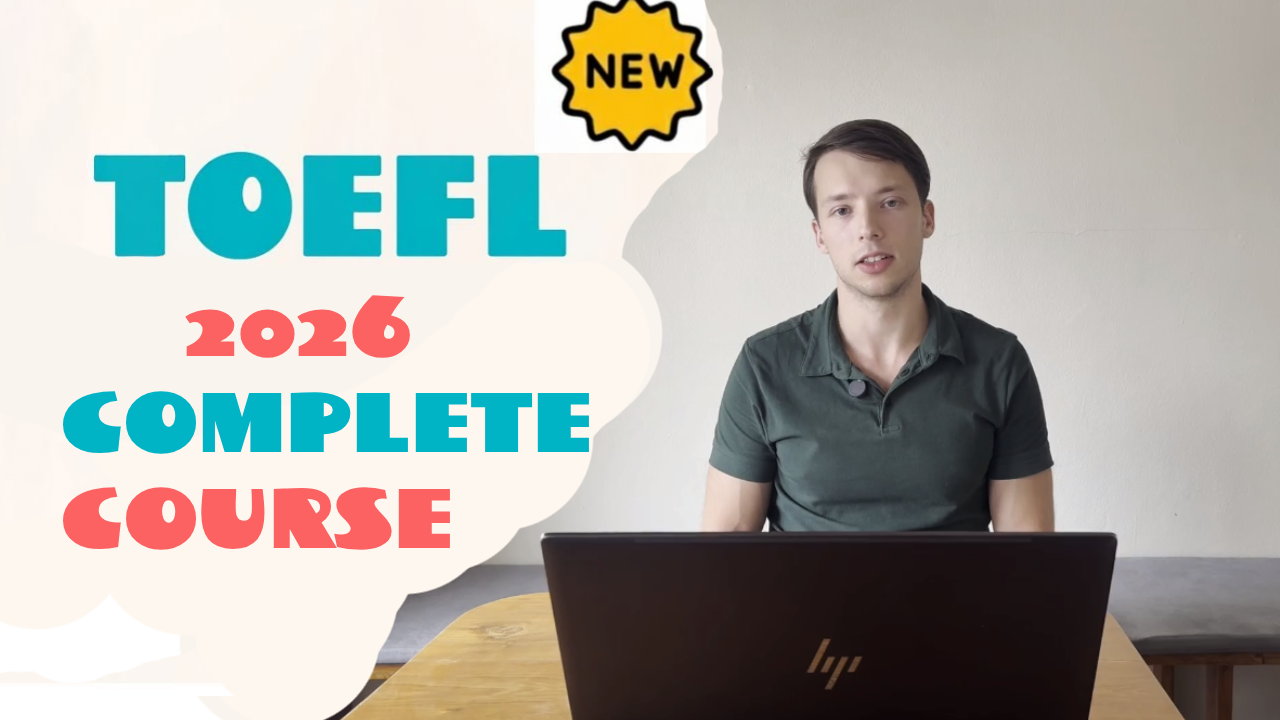
Written by Kirill O'Nayd
English test expert and educator at TestSucceed, where he builds the Duolingo English Test practice tasks and mock tests and has spent years taking apart how computer-adaptive, AI-graded exams award their points. See all TestSucceed preparation materials.