
The last task on the test and the longest speaking turn on it. Up to three minutes on one question, recorded as video, and sent to every institution you share your results with. Most test takers have never spoken continuously for three minutes in any language.
| Time | 3 minutes |
| Preparation time | 30 seconds |
| How many per test | 1 |
| Subscore | Speaking |
| Adaptive | No |
| Scored as | Speaking criteria, and sent to institutions as video |
A written question asking for an opinion or an experience, and up to thirty seconds to read and plan. Then Record Now, and up to three minutes of speech. The question stays on screen throughout, and your camera is recording.
Institutions receive this as video, from the specific test whose results you send them. They can see you as well as hear you. Sit up, look at the camera, and treat it as the admissions interview it partly is.
Three minutes is roughly 350 to 450 words spoken. Deciding the shape in the thirty-second window is what stops the answer drying up at ninety seconds, which is where most unplanned answers stall.
| Section | Job | Roughly |
|---|---|---|
| Opening | Take a position in the first sentence. | 15 seconds |
| First argument | Your strongest reason, developed, with an example. | 50 seconds |
| Second argument | A different kind of reason — practical if the first was principled, or vice versa. | 50 seconds |
| Concession | The strongest point against you, answered honestly. | 40 seconds |
| Close | Resolve the question rather than restate it. | 20 seconds |
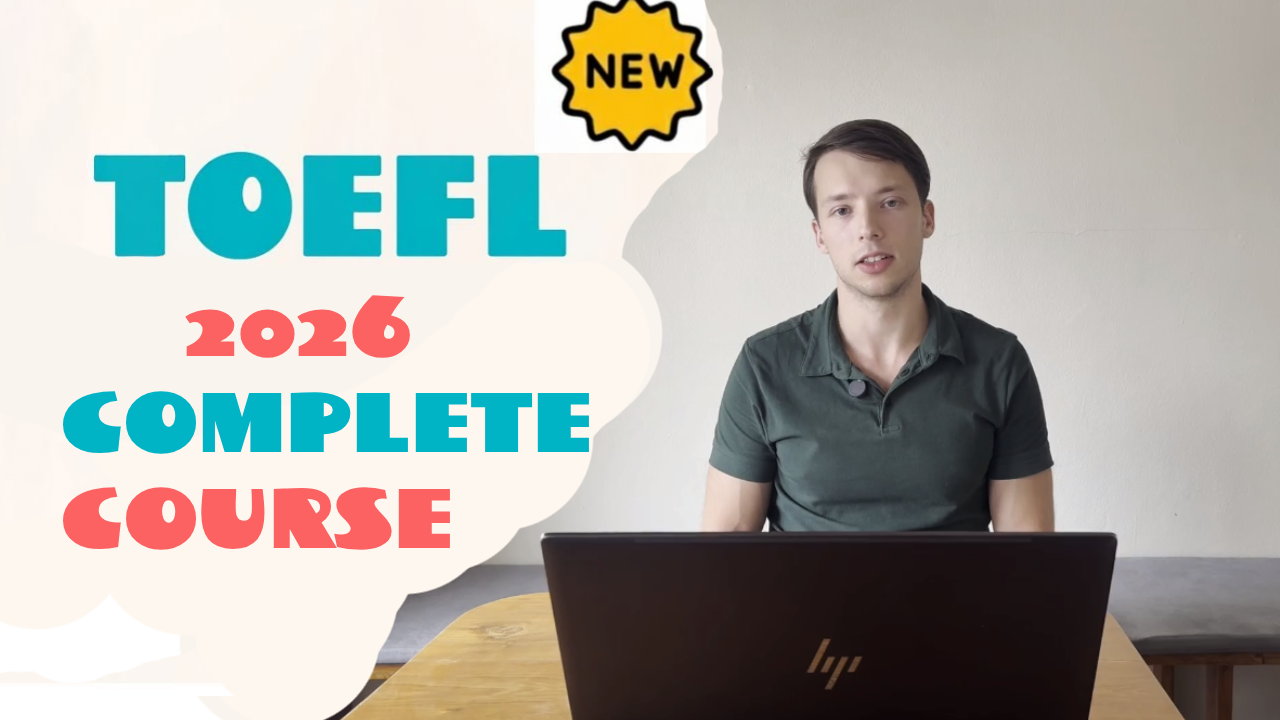
Written by Kirill O'Nayd
English test expert and educator at TestSucceed, where he builds the Duolingo English Test practice tasks and mock tests and has spent years taking apart how computer-adaptive, AI-graded exams award their points. See all TestSucceed preparation materials.